Booking a doctor's appointment in German: phrases and a sample call
To book a doctor's appointment in German, call the practice (die Praxis) and say Ich hätte gern einen Termin (I'd like an appointment). The receptionist will ask whether you are already a patient, what your complaint is and how you are insured. Answer in short sentences: Ich bin neu hier, Ich habe seit drei Tagen Fieber and Ich bin gesetzlich versichert. Repeat the date and time to check them, bring your insurance card, and you are ready for your Termin beim Arzt.
How does going to the doctor's work in Germany?
For most everyday complaints you start with a GP, der Hausarzt or die Hausärztin. You choose the practice yourself, and once you have one, it is your first stop for colds, check-ups, sick notes and referrals. Specialists (der Facharzt, die Fachärztin) are often in their own practices, not in a hospital.
Most practices work with appointments, and many book them by phone or online. Some also have an open consultation hour (die offene Sprechstunde) when you can come without one and wait. In some towns GP practices are full, so it is worth asking early whether a practice takes new patients.
These are the words you will hear on the phone and at the desk:
| German | English |
|---|---|
| die Praxis | the practice |
| die Sprechzeiten | the opening hours of a practice |
| die Anmeldung | the reception desk (and also registering at the Bürgeramt) |
| das Wartezimmer | the waiting room |
| die Versichertenkarte | the health insurance card |
| die Überweisung | the referral to a specialist |
| das Rezept | the prescription |
| die Krankschreibung | the sick note for your employer |
What do you say when you call the practice?
Here is a typical call to a GP practice, from greeting to goodbye. The receptionist speaks first.
Praxis Dr. Becker, guten Tag, Sie sprechen mit Frau Lang.
Dr Becker's practice, hello, this is Ms Lang speaking.
Guten Tag, mein Name ist Anna Novak. Ich hätte gern einen Termin.
Hello, my name is Anna Novak. I'd like an appointment, please.
Waren Sie schon einmal bei uns?
Have you been to us before?
Nein, ich bin neu hier. Nehmen Sie noch neue Patienten auf?
No, I'm new here. Are you still taking new patients?
Ja. Worum geht es denn?
Yes. What is it about?
Ich habe seit drei Tagen Fieber und Halsschmerzen.
I've had a fever and a sore throat for three days.
Wie sind Sie versichert?
What kind of insurance do you have?
Ich bin gesetzlich versichert.
I have statutory health insurance.
Können Sie morgen um halb neun kommen?
Can you come tomorrow at half past eight?
Ja, das passt. Also morgen um halb neun.
Yes, that works. So tomorrow at half past eight.
Genau. Bringen Sie bitte Ihre Versichertenkarte mit.
Exactly. Please bring your insurance card.
Mache ich. Vielen Dank, auf Wiederhören!
I will. Thank you, goodbye!
Notice three things. You never need to explain your whole illness on the phone: one sentence is enough. Halb neun means half past eight, not half past nine, so repeat the time back; telling the time in German explains why. And on the phone Germans say Auf Wiederhören, not Auf Wiedersehen. For openings, spelling your name and the rest of the phone routine, see phone calls in German.
How do you describe your symptoms in German?
You will need this twice: briefly on the phone, and in more detail with the doctor. Three patterns cover most of it.
Ich habe ... for pains and illnesses:
Ich habe Kopfschmerzen.
I have a headache.
Ich habe Husten und Schnupfen.
I have a cough and a cold.
Ich habe seit gestern Bauchschmerzen.
I've had stomach ache since yesterday.
... tut weh for a part of the body that hurts. Use tut for one thing and tun for several:
Mein Rücken tut weh.
My back hurts.
Meine Füße tun weh.
My feet hurt.
Mir ist ... for how you feel. The mir is dative, and the sentence has no "I" as its subject:
Mir ist schwindlig.
I feel dizzy.
Mir ist schlecht.
I feel sick.
Say how long it has lasted with seit and the dative: seit gestern, seit einer Woche, seit drei Tagen. German uses the present tense here, where English says "I have had".
What happens at the appointment?
At the reception desk you say your name and that you have an appointment: Ich habe um halb neun einen Termin. You hand over your insurance card, and new patients often fill in a short form about their health history. Then you wait in the waiting room until your name is called.
With the doctor, these questions and requests are useful:
Muss ich das Medikament jeden Tag nehmen?
Do I have to take the medicine every day?
Brauche ich eine Überweisung zum Facharzt?
Do I need a referral to a specialist?
Können Sie mich bitte krankschreiben?
Could you sign me off sick, please?
If you get a prescription, the next stop is the pharmacy; German for the Apotheke has the phrases. If you need to tell your employer, see calling in sick in Germany.
Who do you call outside opening hours?
When the practice is closed, call 116117 for the medical on-call service (der ärztliche Bereitschaftsdienst). The same number also helps patients find appointments. In an emergency, call 112. Both numbers are free to call from any phone in Germany.
To cancel or move an appointment, call as early as you can:
Ich muss meinen Termin am Donnerstag leider absagen.
Unfortunately I have to cancel my appointment on Thursday.
Kann ich den Termin verschieben?
Can I move the appointment?
How does Linota help you book a doctor's appointment?
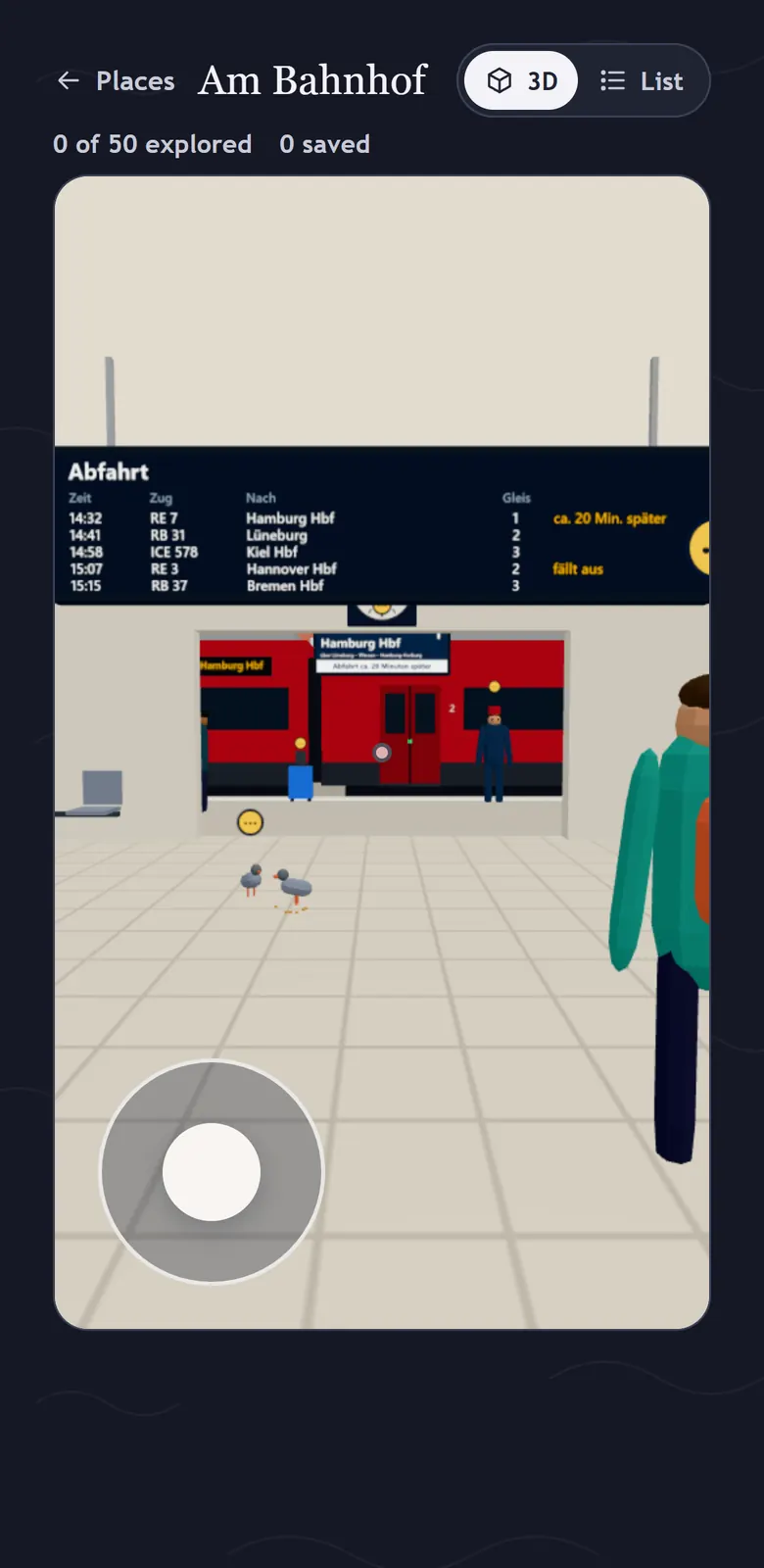
Linota has a mission in which you phone a doctor's practice to get an appointment. You answer the receptionist in your own German, typed or spoken, and every reply gets feedback, so the real call later feels familiar. In Places you can walk through a doctor's practice in 3D and tap the people and things there to see what you might say, ask and hear. And before a real appointment, Prepare a situation gives you what to say and what to expect.
The short version
- Open with Ich hätte gern einen Termin and give one sentence about why.
- Know your answers: new patient or not, your symptoms, gesetzlich or privat versichert.
- Repeat the date and time back, and remember that halb neun is 8:30.
- Describe symptoms with Ich habe ..., ... tut weh and Mir ist ...
- Outside opening hours, call 116117; in an emergency, 112.
Most of the paperwork starts with your address, so if you have just arrived, read the German you need for the Anmeldung as well.
Questions people ask
How do I say I need a doctor's appointment in German?
Say Ich hätte gern einen Termin, or more urgently, Ich brauche heute noch einen Termin. Add your reason in one short sentence, such as Ich habe seit drei Tagen Fieber. That is all the practice needs to find you a slot.
Do I need a referral to see a specialist in Germany?
Not always. Many specialists see patients with statutory insurance without a referral (die Überweisung), but some want one, and a referral from your GP can make it easier to get an appointment. Ask the practice when you call: Brauche ich eine Überweisung?
What number do I call for a doctor at night or at the weekend?
For the medical on-call service outside practice hours, call 116117, which also helps patients find appointments. In an emergency, call 112. If you are unsure which applies, describe your symptoms on 116117 and they will tell you.
What should I bring to the doctor's in Germany?
Bring your health insurance card (die Versichertenkarte), a list of any medicines you take, and a referral if you have one. At your first visit you may be asked to fill in a short form about your health history.
This post teaches the German for the situation. It is not legal, tax, medical or financial advice, and rules change: for your own case, ask the office, your employer, a doctor or a qualified adviser.